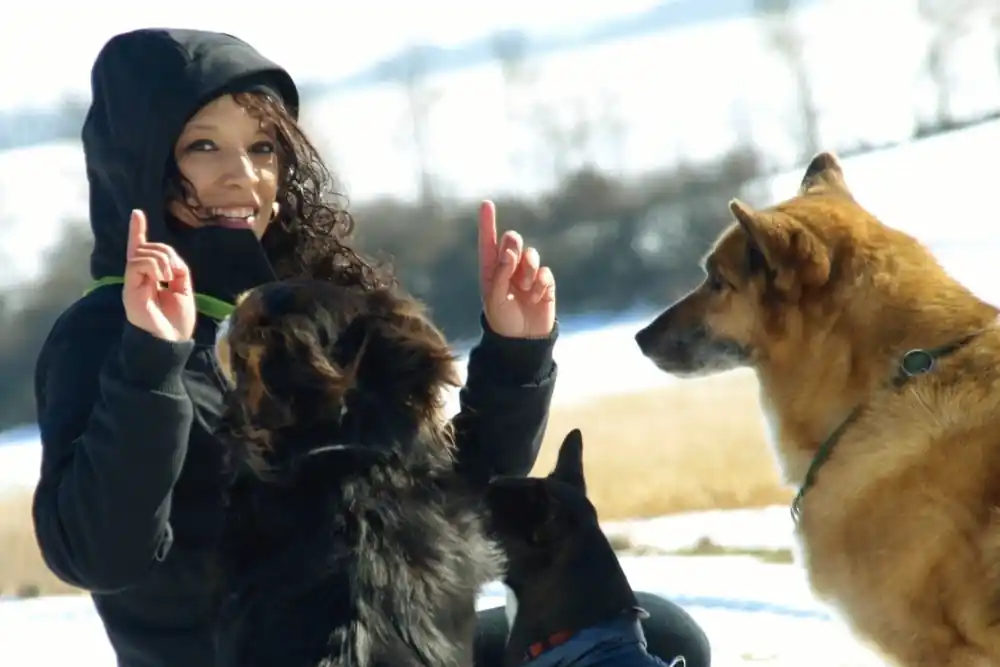
Dog recall training is one of the most important skills your dog can learn, yet it often falls apart outside.
If you’re struggling with real-world obedience, check out our dog training services.
At home, your dog listens.
However, the moment you step outside, everything changes.
Suddenly, they ignore you, keep sniffing, or run the other way.
This is not stubbornness.
Instead, it’s a lack of structured recall training in real-world environments.
Quick takeaway: Reliable recall is not built by repeating “come” louder. It is built through clear practice, gradual progression, and making your dog want to choose you.
Why Dog Recall Training Fails
Most recall issues happen because the environment is more rewarding than the owner.
Outside, your dog is constantly processing:
- New smells
- Movement
- Other dogs
- People
- Sounds
As a result, your voice competes with everything else.
If recall hasn’t been trained through gradual exposure, your dog will choose the environment every time.
What Recall Actually Means
Dog recall training is not just your dog hearing their name.
It means your dog chooses to disengage from distractions and come back to you.
In other words, recall is a decision, not just a reaction.
For that reason, the behavior must be built step-by-step and reinforced consistently.
What Your Dog Must Know First
Before recall becomes reliable, a few foundational skills need to be in place.
Your dog should:
- Engage with you naturally
- Understand rewards clearly
- Respond in low-distraction environments
Otherwise, expecting recall outside will lead to frustration.
This is especially common with distraction issues, which I break down in our Blog: dog distraction training basics for real life.
Dog Recall Training Step-by-Step
Step 1: Start Indoors
Begin in a quiet space where your dog already succeeds.
Call your dog once.
Then reward immediately when they come.
Short sessions work best, especially in the beginning.
Step 2: Add Distance
Next, increase space between you and your dog.
Call them from another room or across the house.
This builds value in choosing you, even with small challenges.
Step 3: Move Outside (Low Distraction)
Now transition to a calm outdoor area.
For example, use a backyard or quiet street.
A long leash helps maintain control while allowing freedom.
Using the right tools matters, which is why long leashes are so effective for training — learn more in our Blog top benefits of using long leashes for dog training.
Reward heavily when your dog responds correctly.
Step 4: Gradually Increase Distractions
Once your dog succeeds consistently, begin adding difficulty.
Move to slightly busier environments such as:
- Quiet parks
- Neighborhood walks
- Areas with mild distractions
However, if your dog starts ignoring you, the difficulty is too high.
Step 5: Make Recall Valuable
Your dog must believe coming to you is worth it.
Therefore, use:
- High-value treats
- Praise
- Play
If the environment is more rewarding than you, recall will fail.
Common Dog Recall Training Mistakes
Repeating Commands
Calling your dog over and over teaches them they don’t need to respond the first time.
Instead, say it once and follow through.
Ending Fun Every Time
If recall always leads to leaving the park or ending play, your dog will avoid coming.
So, mix in positive outcomes and release them again.
Progressing Too Quickly
Skipping steps causes confusion and inconsistency.
If your dog struggles, go back to an easier level and rebuild.
Why Dog Recall Training Matters in Real Life
Reliable recall is not just helpful — it’s essential.
For example, your dog might run toward:
- Another dog
- A person
- A busy street
In those moments, recall is what keeps your dog safe.
Without it, control is limited.
Final Thoughts
Dog recall training requires consistency, patience, and structure.
Although many owners assume their dog is ignoring them, the real issue is usually training progression.
When recall is built correctly, your dog learns to choose you, even in distracting environments.
If your dog doesn’t come when called, the process simply needs to be adjusted.
If you need help building reliable recall in real-life situations, you can book a training session here.
I help dog owners in Suwanee, Buford, Alpharetta, Johns Creek, Lawrenceville, Duluth, Sugar Hill, and Gwinnett County create dogs that actually listen outside.
This blog has also been published on Vocal.