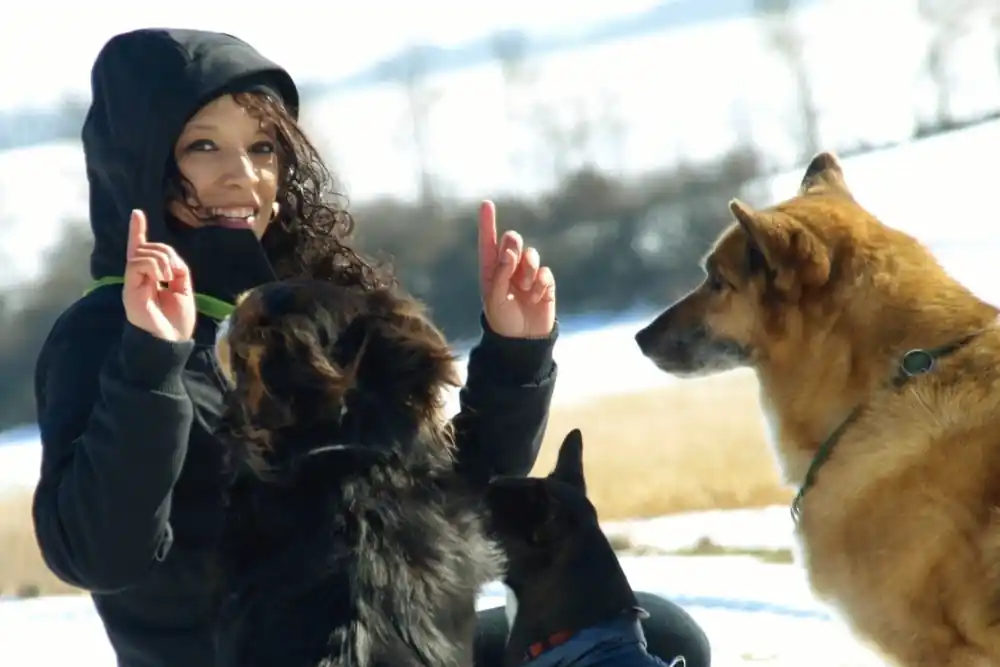
Dog distraction training helps dogs listen and respond even when the environment is busy.
Many dogs follow commands well at home. However, the moment they step outside, everything changes.
Smells, people, noises, and other dogs quickly grab attention. As a result, focus disappears.
Because of this, dog distraction training teaches dogs how to stay calm and responsive even when interesting things are happening around them.
Key idea: Your dog isn’t ignoring you. Instead, the environment is simply more rewarding than you right now.
What Dog Distraction Training Means
Dog distraction training teaches a dog to respond to commands even when something exciting appears nearby.
The goal is not to remove distractions. Instead, the goal is helping your dog learn that listening to you still matters.
This type of training builds:
- focus on the owner
- self-control in stimulating environments
- reliable responses to commands
As these skills improve, dogs become much easier to handle during walks and outings.
How Dog Distraction Training Begins
Dog distraction training should always start in calm environments.
Quiet spaces allow your dog to clearly understand what is expected before distractions are introduced.
Good starting locations include:
- living room
- backyard
- quiet driveway
Dogs should respond clearly to cues like sit, down, stay, and come in these environments.
Strong fundamentals make everything easier. If your dog needs help here, you can build that foundation through obedience training.
Adding Mild Distractions
Once commands are reliable, you can begin adding mild distractions.
Try locations like:
- front yard
- quiet sidewalk
- calm park
These environments introduce small challenges. At the same time, they still allow your dog to succeed.
Training Around Other Dogs
Other dogs are one of the biggest distractions.
Because of excitement, many dogs start pulling, barking, or jumping.
Helpful exercises include:
- asking for a sit while another dog walks by
- rewarding calm leash walking
- practicing focus during walks
Over time, practice builds impulse control. Dogs learn they do not need to react to everything. If needed, behavior training can help address stronger reactions.
Practicing in Different Locations
Reliable behavior requires practice in multiple places.
Dogs do not automatically understand that commands apply everywhere.
Practice in places like:
- parks
- walking trails
- sidewalks
- quiet public spaces
Each new location strengthens focus and reliability.
Increasing Difficulty Gradually
Training should always progress step by step.
Start calm. Then increase difficulty slowly. Finally, work in busier environments.
If your dog struggles, simply go back one step. This keeps progress smooth and frustration low.
Building Real-World Focus
Dog distraction training turns basic obedience into real-life reliability.
Dogs will always notice the environment. However, training teaches them to stay calm instead of reacting.
With consistency, your dog learns to stay focused even when things get busy.
If you want help improving your dog’s reliability, you can explore training options at Pups & Paws Dog Training.