Your eight-week-old puppy peed outside at 8:00. At 8:20, they are squatting beside the couch.
You wonder whether a puppy needs to go out every twenty minutes, every hour, or only after meals. The answer changes throughout the day as activity, food, sleep, and development change.
The job of an age-based potty schedule is to organize observations and reduce preventable accidents, not promise an exact bladder timer.
The Big Idea
The next potty trip should be planned around the puppy’s last successful potty and what happens next.
What Is Really Happening?
Age estimates are starting references. An awake puppy who just played and drank water may need to go much sooner than one who is asleep.
Your puppy woke up from a nap, drank water, and ran to play. That sequence matters more than an arbitrary timer.
What Owners Often Think
“A three-month-old puppy can always hold it for three hours.”
Age estimates are starting references. An awake puppy who just played and drank water may need to go much sooner than one who is asleep.
A Practical Plan You Can Begin Using
Use age as a starting reference, then adjust breaks based on actual potty results and the puppy’s daily triggers.
1. Start with predictable transitions
Offer outdoor breaks after waking, meals, drinking, and active play. Those moments often change the timing even when the last trip was recent.
Watch for the earlier pattern: Bathroom trips happen only after an accident. Adjust the next repetition before it escalates.
2. Track actual success
Note whether the puppy peed or pooped, not merely that you opened the door. A trip without elimination may require another supervised opportunity soon.
3. Shorten the interval after accidents
If an accident happens before your planned trip, do not punish the puppy. Adjust the next daytime interval and prevent access to the accident spot while cleaning.
4. Increase freedom slowly
Only extend intervals and unsupervised movement after repeated success. A good week is evidence of progress, not a guarantee that accidents can no longer happen.
Rather than jumping ahead, look for this change: You catch more opportunities outdoors and can adjust the interval responsibly.
What Progress Should Look Like
Before: Bathroom trips happen only after an accident.
The change: You plan trips around waking, eating, drinking, activity, and the puppy’s current reliability.
After: You catch more opportunities outdoors and can adjust the interval responsibly.
Common Mistakes to Avoid
Using a timer instead of watching the puppy
Schedules support observation; they do not replace it.
Assuming nighttime sleep predicts daytime holding
Awake activity, food, water, and excitement create different bathroom needs.
Watch: Teaching a calm crate exit
Watch this related example: puppy potty training. The written guidance in this article provides the topic-specific plan.
Try This Today: A Five-Minute Win
Start by practicing the small change that matters here: Use age as a starting reference, then adjust breaks based on actual potty results and the puppy’s daily triggers.
Your Next Three Actions
1. Write the time of the next planned outdoor potty trip.
2. Record what the puppy last did: slept, ate, drank, or played.
3. If the puppy does not potty outside, supervise closely until the next attempt.
Pay attention to this situation during practice: Your puppy woke up from a nap, drank water, and ran to play. That sequence matters more than an arbitrary timer. If the dog struggles, improve distance, timing, or management before your next attempt.
Frequently Asked Questions
How often should an eight-week-old puppy go outside?
Very frequently during waking hours and after routine transitions; adjust to the puppy’s individual pattern.
Should I wake a sleeping puppy every hour?
Do not use a daytime schedule as a rigid rule for waking a comfortable sleeping puppy; plan an opportunity soon after waking.
When do potty intervals get longer?
Gradually, as your puppy matures and demonstrates consistent success in real life.
Keep Learning With Pups & Paws
Related reading: How to Potty Train a Puppy: A Simple Step-by-Step Guide →
Related reading: Puppy Potty Training Book: A Simple Step-by-Step Guide →
Related reading: How Long Can You Leave a Puppy Home Alone? →
Free Puppy Potty Training Schedule & Tracker
A related free guide may help you apply this topic at home. It works best when you pair it with the specific steps on this page: Use age as a starting reference, then adjust breaks based on actual potty results and the puppy’s daily triggers.
Need a Complete Puppy Potty Training Plan?
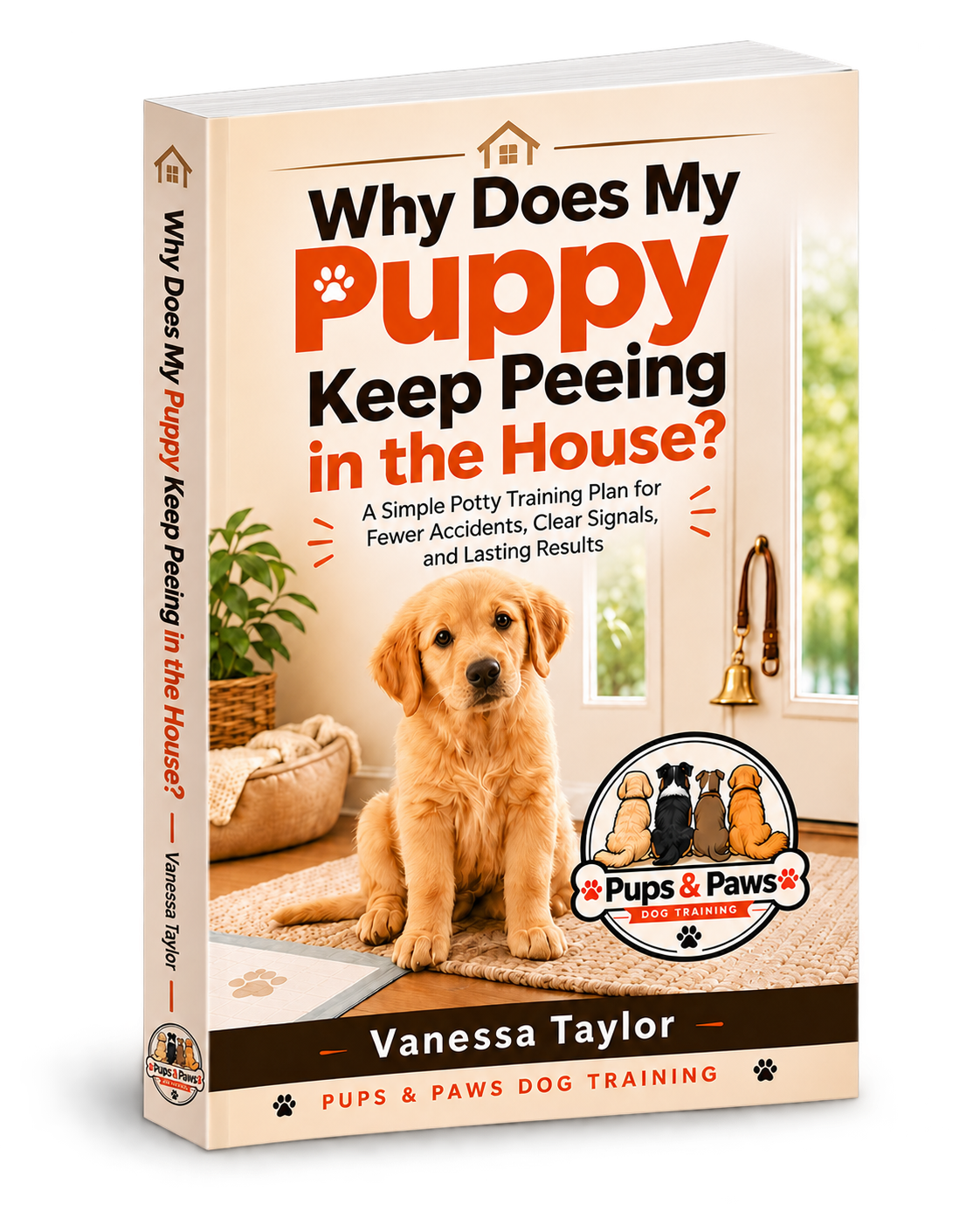
My book, Why Does My Puppy Keep Peeing in the House?, brings potty timing, supervision, crate routines, accidents, and clear signals together in one practical system.
Want Help Making This Work in Real Life?
Private training can help your household apply the specific goal in this guide: You catch more opportunities outdoors and can adjust the interval responsibly.
Explore Training
Book a First Session
Serving Suwanee, Georgia and surrounding service-area communities.