Your puppy peed outside, then had an accident inside ten minutes later. You are doing everything the internet says, yet the results make no sense.
Potty training becomes easier to troubleshoot when you stop mixing contradictory advice and follow one cycle of timing, observation, supervision, and reinforcement.
This is the canonical potty-training how-to pillar and should not become another shopping list or printable index.
The Big Idea
A consistent potty-training cycle is more effective than hoping your puppy will signal before they are ready.
What Is Really Happening?
An outdoor trip without elimination is not a successful potty break. Even after a successful trip, play or drinking can change the next need quickly.
You waited outside, nothing happened, then the puppy peed five minutes after coming in. The answer is usually in timing and supervision.
What Owners Often Think
“If my puppy went outside, they should not have an accident afterward.”
An outdoor trip without elimination is not a successful potty break. Even after a successful trip, play or drinking can change the next need quickly.
A Practical Plan You Can Begin Using
Record actual eliminations, give timely outdoor opportunities, and use a supervised no-potty reset if the trip was unsuccessful.
1. Choose one outdoor potty location
Use a predictable route, a reasonable amount of quiet time, and immediate reinforcement when your puppy eliminates outside.
Watch for the earlier pattern: Your puppy pees indoors despite frequent outdoor trips. Adjust the next repetition before it escalates.
2. Supervise after unsuccessful trips
If the puppy did not potty, restrict unsupervised freedom. Return outside after a short manageable interval rather than assuming the problem is solved.
3. Schedule around real transitions
Offer bathroom opportunities after waking, meals, drinking, and energetic play. Record successes to discover the correct interval for this puppy.
4. Clean accidents and reset the plan
Use an appropriate enzymatic cleaner. Avoid scolding; adjust supervision and timing so the next repetition is more likely to succeed.
5. Expand freedom only after consistency
Gradually offer more room access while continuing to monitor patterns. Do not stop the routine after one dry day.
Rather than jumping ahead, look for this change: Accidents become less frequent as the routine becomes clearer.
What Progress Should Look Like
Before: Your puppy pees indoors despite frequent outdoor trips.
The change: You coordinate potty opportunities with meals, naps, play, supervision, and rewards.
After: Accidents become less frequent as the routine becomes clearer.
Common Mistakes to Avoid
Giving full-house access too early
Use a suitable crate, standalone gate, or supervised house leash to prevent unnoticed accidents.
Punishing accidents
Puppies need better timing and clearer reinforcement, not fear of eliminating near you.
Watch: Teaching a calm crate exit
Watch this related example: puppy potty training. The written guidance in this article provides the topic-specific plan.
Try This Today: A Five-Minute Win
Start by practicing the small change that matters here: Record actual eliminations, give timely outdoor opportunities, and use a supervised no-potty reset if the trip was unsuccessful.
Your Next Three Actions
1. Record the last successful outdoor potty time.
2. Choose the next break based on the last meal, nap, and play.
3. Keep the puppy supervised until the planned outing.
Pay attention to this situation during practice: You waited outside, nothing happened, then the puppy peed five minutes after coming in. The answer is usually in timing and supervision. If the dog struggles, improve distance, timing, or management before your next attempt.
Frequently Asked Questions
How long does potty training take?
It varies with age, routine, health, and consistency; setbacks are common.
Should I use pee pads?
Not necessarily when teaching an outdoor routine; exceptional situations require individual planning.
When is an accident a medical concern?
Frequent small urination, discomfort, blood, or sudden regression merits veterinary evaluation.
Keep Learning With Pups & Paws
Related reading: Puppy Potty Training Schedule by Age: 8 Weeks to 6 Months →
Related reading: Free Puppy Potty Training Printables & Resources →
Related reading: Puppy Potty Training Supplies: What You Actually Need →
Free Puppy Potty Training Schedule & Tracker
A related free guide may help you apply this topic at home. It works best when you pair it with the specific steps on this page: Record actual eliminations, give timely outdoor opportunities, and use a supervised no-potty reset if the trip was unsuccessful.
Need a Complete Puppy Potty Training Plan?
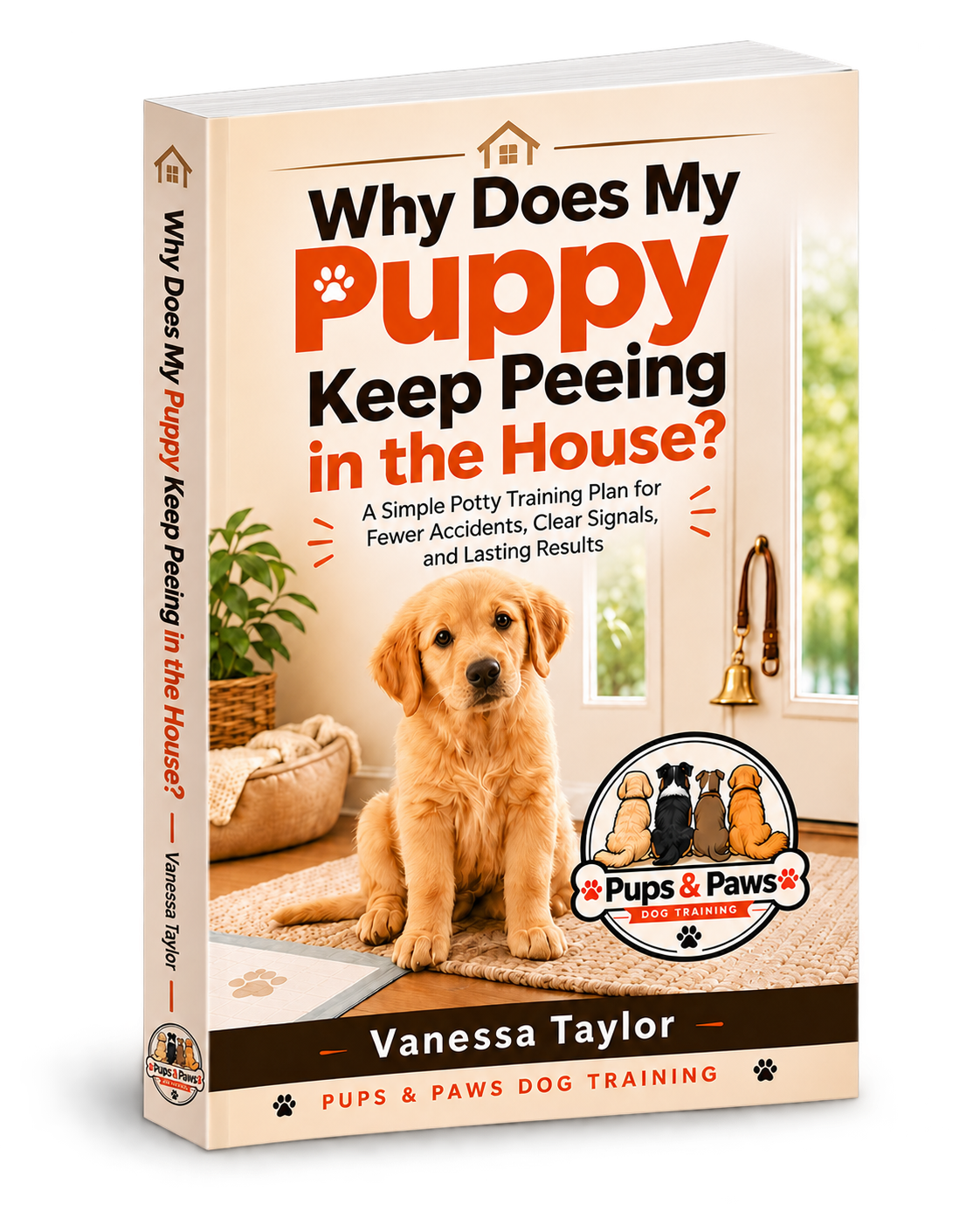
My book, Why Does My Puppy Keep Peeing in the House?, brings potty timing, supervision, crate routines, accidents, and clear signals together in one practical system.
Want Help Making This Work in Real Life?
Private training can help your household apply the specific goal in this guide: Accidents become less frequent as the routine becomes clearer.
Explore Training
Book a First Session
Serving Suwanee, Georgia and surrounding service-area communities.