The car ride home is quiet. Too quiet. Your new dog is pressed into the corner of the back seat, not looking at you, not looking at anything.
Inside, they find the farthest corner of the room and stay there. They won’t touch the food you set out. They flinch when you move too fast, even gently.
If this is your first night with a rescue dog, take a breath. None of this means something is wrong, and it definitely doesn’t mean you made a mistake. It means your dog is doing exactly what almost every rescue dog does at first.
What’s Actually Happening in the First Few Days
Most new owners think a quiet, withdrawn dog is a sad dog, or worse, a dog who doesn’t like their new home. So they try to fix it — more attention, more toys, more introductions to friends and family, hoping affection will speed things along.
What’s actually happening is closer to shock than sadness. Your dog’s whole world just changed: new smells, new sounds, new rules, no idea yet whether any of it is safe. Shelters, rescues, and vets often describe this using a rough timeline sometimes called the “3-3-3” guideline — roughly 3 days to start decompressing, 3 weeks to begin learning the household routine, and 3 months to really settle in and feel secure. Every dog moves through it differently, and it’s a general pattern, not a promise.
Knowing that timeline changes how those first days feel. A dog who’s hiding isn’t rejecting you. They’re coping, the same way any of us would need a minute after a huge, disorienting change.
Big Idea
Your rescue dog isn’t being trained yet — they’re being kept safe while their nervous system catches up. The right setup does most of that work for you.
The Rescue Dog Checklist
1. A Martingale Collar with ID Tag — Ready Before Pickup Day
Have this on hand before you even bring your dog home. A martingale collar tightens slightly if pulled, which matters a lot in the first days, when a dog you don’t know yet is in an unfamiliar place and looking for any gap to bolt through. A flat collar is much easier to slip out of.
Put an ID tag on it immediately, with your phone number, not the shelter’s or foster’s. If your dog is microchipped, update the registration to your information the same day. New rescues are a genuine flight risk in week one, even calm-seeming ones, so this step isn’t optional.
A properly sized martingale collar is inexpensive and solves one of the biggest early risks with a new rescue.
2. A Secure Harness, Connected to the Collar as Backup
A well-fitted harness gives you a second, more secure point of control, especially important since you don’t yet know how your dog reacts to sudden noises or surprises outside.
For the first few weeks, clip your leash to both the harness and the martingale collar at once, using a short connector strap. It sounds like overkill until you remember: you don’t yet know this dog’s full history, triggers, or how they respond to stress. If one connection point fails, the other holds. This is standard advice from rescue organizations for exactly that reason.
This is the harness and connector setup we recommend for every newly adopted dog in their first few weeks.
3. A Sturdy 4–6 Foot Leash
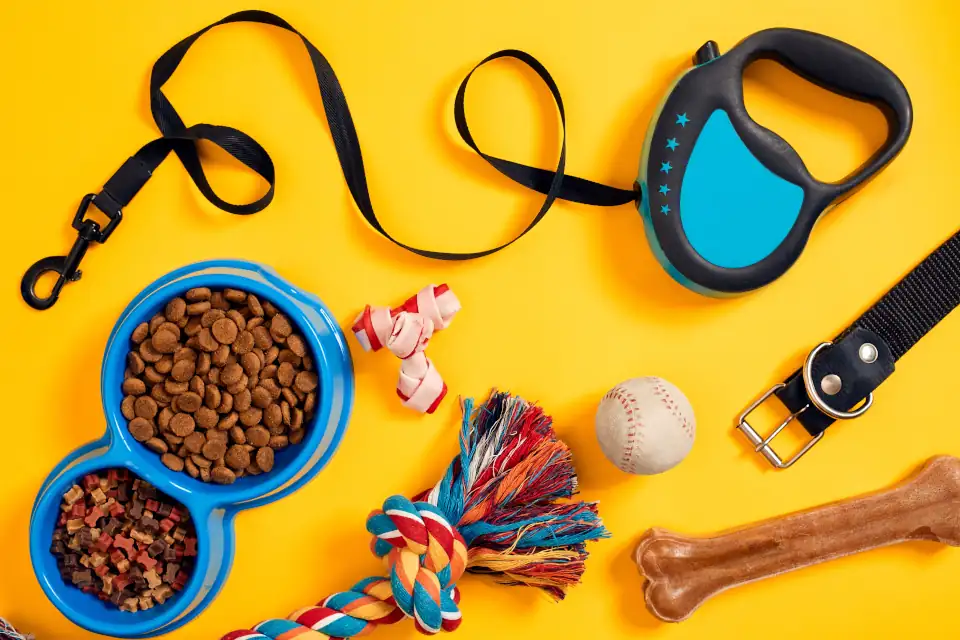
Skip the retractable leash for now, and skip long lines in public too. In the first weeks, you want to be physically close to your dog and in full control if something startles them. A basic, sturdy leash with a comfortable handle is all you need outdoors while you’re both still learning each other.
A simple, strong leash is one less thing to think about while you’re focused on your dog.
4. A Quiet, Designated Safe Space
This can be a crate, or just a corner of a room with a bed and a gate — whichever your dog seems to prefer. The goal isn’t confinement; it’s giving them one predictable place that’s always calm and always theirs.
Don’t force a crate if your dog is showing real panic about it — pacing, drooling, frantic escape attempts. Some rescues adjust to a crate quickly; others need a gated space instead. Either is fine. What matters is that the space exists and stays consistent.
Safety Tip
Keep the safe space away from main foot traffic — not in a busy hallway or by the front door. A rescue dog needs somewhere they won’t be startled by comings and goings while they’re still settling in.
5. Baby Gates
Gates let your dog explore the house gradually instead of all at once, and give you an easy way to manage introductions to other pets or family members at a pace your dog can handle, rather than a flood of new everything on day one.
A simple pressure-mounted gate makes gradual introductions so much easier to manage.
6. Their Own Bed, Bowls, and the Same Food They’re Used To
Ask the shelter or foster what food your dog has been eating, and stick with it for at least the first week. A sudden food switch on top of everything else is a common reason for stomach upset right when you’re already watching closely for signs something’s wrong. If you do want to switch foods eventually, do it slowly, mixed in over a week or two.
A bed of their own, placed in that quiet safe space, gives them one more thing in the house that’s consistently, predictably theirs.
7. High-Value Treats — for Connection, Not Commands Yet
In the first week, treats aren’t really about training. They’re about giving your dog small, low-pressure reasons to feel good around you. Toss one nearby without demanding anything in return. Let them come to you for it, on their own time.
Soft, high-value treats work well here since they’re easy for a nervous dog to eat quickly and get back to feeling safe.
8. Something Calming to Do
A frozen, stuffed Kong gives a stressed dog something to focus on besides the newness of everything around them. Licking and chewing are naturally calming behaviors for dogs, so this small tool does more for decompression than most people expect — and it buys you a quiet 20-30 minutes while your dog settles.
A frozen, stuffed Kong is an easy, low-cost way to help a nervous dog settle during those first quiet evenings home.
Every rescue dog carries a different history, and some need more support than a checklist alone can offer, especially around fear, resource guarding, or a dog who won’t eat or engage at all after the first couple of days. That’s not a sign you did anything wrong. It’s a sign it’s time to loop in your rescue organization, a vet, or a trainer.
Before → Turning Point → After
Before: A dog frozen in the corner of the living room, untouched food, an owner unsure if any of this is normal.
Turning point: A quiet, consistent safe space, the same food they already know, no pressure to perform or socialize — just time and a predictable routine.
After: A dog who starts choosing to be in the same room as you, who eats without hesitation, who’s slowly becoming the version of themselves you haven’t met yet.
Micro Win
Tonight, just sit near your dog’s safe space with a book or your phone — no eye contact, no calling them over. Let them get used to your presence without any pressure to interact. That’s a real step forward, even if nothing else happens.
Common Mistakes
Planning a “Welcome Home” Gathering
A house full of new people on day one is overwhelming even for a confident dog. Keep the first week quiet, and let friends and family meet your dog gradually, once they’ve settled in.
Assuming They’re Fully House-Trained
Even if the shelter or foster says your dog is house-trained, a new environment resets a lot of habits. Treat the first couple weeks like you’re confirming it, not assuming it — consistent bathroom breaks, supervision indoors.
Skipping the Vet Visit Because They “Seem Fine”
Get a wellness check scheduled in the first week or two regardless. It’s the easiest way to catch anything the shelter or foster situation may have missed.
A lot of this checklist overlaps with what a new puppy needs too, especially the crate and potty-training setup — worth a look if you want the fuller breakdown on getting that routine established.
And if your rescue dog is showing real fear or reactivity on walks once they’ve had time to decompress, that’s a related next step worth reading, since the approach is a little different from general leash manners.
FAQ
How long until my rescue dog acts “normal”?
Many dogs follow a rough pattern of a few days to decompress, a few weeks to learn the routine, and a few months to feel fully settled — but it varies a lot by dog. Slow, steady progress is a good sign, even if it doesn’t feel fast enough.
Is it normal for my rescue dog not to eat at first?
A reduced appetite in the first day or two is common with the stress of a new environment. If it goes beyond 48 hours, or your dog seems unwell in other ways, check in with your vet or the rescue organization.
Should I crate my rescue dog?
Only if they take to it without real distress. A crate can be a great safe space for many dogs, but a gated quiet room works just as well for a dog who finds the crate itself stressful.
Key takeaway: A rescue dog’s first days aren’t about training — they’re about safety, consistency, and time. Get the setup right, and most of the hard part takes care of itself.
Bringing Home a Rescue Soon?
If you want help setting up the first few weeks the right way, or your dog needs a bit more support than a checklist can offer, we’re happy to talk it through.